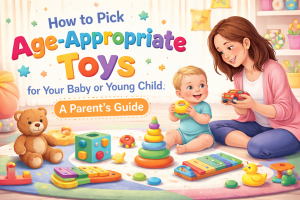
As a parent, one of the most exciting parts of raising your child is watching them discover and explore the world around them. One of the key tools for supporting their development is toys. Toys are not just for entertainment; they play a crucial role in your child’s growth and learning.
The right toys can encourage motor skills, cognitive development, social interaction, and emotional regulation.
Choosing age-appropriate toys is essential for both your baby’s and young child’s safety and development. With so many options available, it can be overwhelming to determine which toys will be most beneficial at each stage of your child’s growth. In this blog post, we’ll guide you through the process of selecting age-appropriate toys for your baby or young child, from birth through the toddler years.
Understanding Developmental Milestones
Before we dive into specific toy recommendations, it’s essential to understand that children develop at different rates, and age-appropriate toys should align with their cognitive, motor, and social milestones. Toys help your baby or toddler learn new skills and engage with the world, but they must be suited to their abilities and needs at each stage of development.
Babies and young children go through rapid changes in physical, cognitive, and emotional development. For example, infants primarily focus on exploring their senses and learning about their surroundings, while toddlers start developing problem-solving skills, imagination, and social interactions. Age-appropriate toys should support these milestones.
Choosing Toys for Infants (0-6 Months)
In the first six months of life, your baby is primarily focused on sensory exploration—sights, sounds, textures, and simple cause-and-effect experiences. During this time, babies develop motor skills like grasping, reaching, and rolling. The right toys during these early months should help stimulate these senses and build foundational skills.
- Soft Rattles and Grasping Toys: Infants begin reaching for and grasping objects around three months. A soft rattle or grasping toy with colorful, contrasting patterns can capture your baby’s attention and encourage hand-eye coordination.
- Teething Toys: Babies begin teething around four to six months. Safe, soft teething toys that can be chewed on provide relief and stimulation for sore gums. Look for BPA-free options made of soft rubber or silicone.
- High-Contrast Toys: Newborns are not able to see colors very clearly, so toys in high-contrast colors (black, white, red) can be particularly appealing to them. High-contrast toys also help develop visual tracking skills.
- Textured Toys: Soft fabric books or toys with different textures can engage your baby’s sense of touch. Look for toys that include soft fabrics, crinkly materials, or smooth surfaces to provide sensory variety.
- Play Mats and Activity Gyms: These are great for tummy time, which is vital for your baby’s muscle development. Many mats and gyms include toys that dangle, encouraging babies to reach and grab, helping them improve their motor skills.
Choosing Toys for Babies (6-12 Months)
As babies reach six months and beyond, they become more mobile and begin developing their fine and gross motor skills. At this stage, babies are learning to sit up, crawl, and possibly even stand. They also begin to develop a greater sense of object permanence, meaning they start to understand that objects continue to exist even when they’re not in sight.
- Stacking Toys: Simple stacking rings or cups encourage your baby to practice their hand-eye coordination and develop fine motor skills. This activity also helps babies understand concepts like size and order.
- Activity Cubes and Shape Sorters: These toys engage multiple senses and can keep your baby entertained while promoting cognitive development. Babies can practice their problem-solving skills and learn about shapes, colors, and textures.
- Interactive Books: Soft, cloth or board books with bright images, textures, and even buttons that make sounds can engage your baby’s curiosity and help build their early love for reading. Choose books that introduce animals, colors, numbers, or family members.
- Musical Toys: Babies love to make noise, so musical toys like a xylophone, drum, or maracas are fantastic for developing auditory skills and rhythm. Musical toys also help develop fine motor skills as babies tap or shake instruments.
- Push and Pull Toys: As your baby becomes more mobile, push or pull toys can help them practice walking or crawling. These toys support physical development and can also help strengthen balance and coordination.
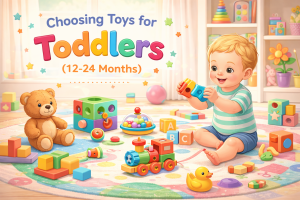
Choosing Toys for Toddlers (12-24 Months)
Around the age of one, toddlers begin to walk, talk, and explore the world in a more active way. Their cognitive development accelerates, and they start engaging in more complex activities like problem-solving, pretend play, and basic social interactions. At this stage, toys should help stimulate their growing imagination, social skills, and physical abilities.
- Building Blocks: Toddlers love stacking and building, and building blocks are perfect for fostering their creativity and problem-solving skills. Simple wooden blocks, large plastic bricks, or soft foam blocks help toddlers develop spatial awareness, fine motor skills, and hand-eye coordination.
- Pretend Play Toys: Pretend play becomes an essential part of toddlerhood. Toys like toy kitchens, dolls, action figures, and playsets allow toddlers to mimic adult behavior, which helps develop social and language skills. This type of imaginative play also nurtures creativity and emotional development.
- Puzzles: Simple, large-piece puzzles can help your toddler develop problem-solving skills and hand-eye coordination. Look for puzzles with animal shapes, numbers, or letters to introduce educational concepts in a fun, engaging way.
- Ride-on Toys: As toddlers become more active, ride-on toys like scooters, tricycles, or baby cars help improve their balance, coordination, and muscle strength. These toys also encourage outdoor play and independence.
- Interactive Learning Toys: At this stage, toddlers are keen to explore cause and effect. Toys like talking dolls, activity tables, and shape sorters with interactive features can keep toddlers engaged while teaching them about numbers, letters, and basic concepts.
- Musical Instruments: As toddlers begin to talk and explore language, they may also enjoy making music. Instruments like tambourines, xylophones, or maracas encourage creativity, rhythm, and motor skills. These toys are also a great way to introduce toddlers to basic musical concepts.
Choosing Toys for Preschoolers (3-5 Years)
As your child approaches the preschool years, they become more independent, creative, and social. They begin to play with other children more and start developing their own interests and preferences. At this stage, toys should help foster these new skills, including early literacy, numeracy, fine motor development, and cooperative play.
- Art Supplies: Encourage creativity with crayons, markers, paints, and playdough. These open-ended toys allow preschoolers to express themselves and practice their fine motor skills. Art activities also help with color recognition, hand-eye coordination, and concentration.
- Board Games and Card Games: Simple board games with large pieces or card games designed for young children can be great for social skills. Games like “Memory” or “Candy Land” introduce children to taking turns, following rules, and problem-solving.
- Building Sets: More advanced building sets, such as those with more complex pieces and patterns, help preschoolers develop their engineering and problem-solving skills. Toys like LEGO sets or magnetic building tiles can encourage creativity and challenge them to think outside the box.
- Educational Tablets and Technology: Interactive, age-appropriate educational tablets or electronic books can teach preschoolers early literacy, math, and problem-solving skills. However, screen time should be limited, and the use of these devices should be balanced with physical activity and social interaction.
- Dolls and Action Figures: At this stage, children often engage in more elaborate pretend play, and dolls or action figures provide the perfect tool for storytelling. These toys foster social-emotional development and help kids understand different perspectives and emotions.
General Guidelines for Choosing Age-Appropriate Toys
- Safety First: Always ensure that the toys are age-appropriate and free of small parts that could pose a choking hazard. Check for safety certifications and labels to ensure the toys meet safety standards.
- Quality Over Quantity: You don’t need to buy an overwhelming number of toys for your child. Focus on a few high-quality toys that will engage your child in different ways. A well-chosen set of toys is better than a pile of plastic items that can’t offer much educational value.
- Encourage Exploration: Choose toys that encourage exploration, creativity, and social interaction. These kinds of toys help children develop curiosity and build essential cognitive and emotional skills.
- Rotate Toys: To keep your child engaged and avoid overstimulation, rotate their toys every few weeks. This makes old toys feel like new ones and allows them to rediscover forgotten favorites.
Conclusion
Picking age-appropriate toys for your baby or young child is an essential part of fostering their development. By choosing toys that are suited to their developmental stage, you are providing
them with the tools they need to learn, grow, and thrive. From sensory toys for infants to building blocks for toddlers and imaginative play for preschoolers, the right toys can make all the difference in your child’s growth.
Remember to always prioritize safety, focus on quality, and encourage creativity and exploration. With these guidelines in mind, you’ll be able to choose toys that will not only entertain your little one but also contribute to their developmental milestones, creating a foundation for a lifetime of learning and fun.